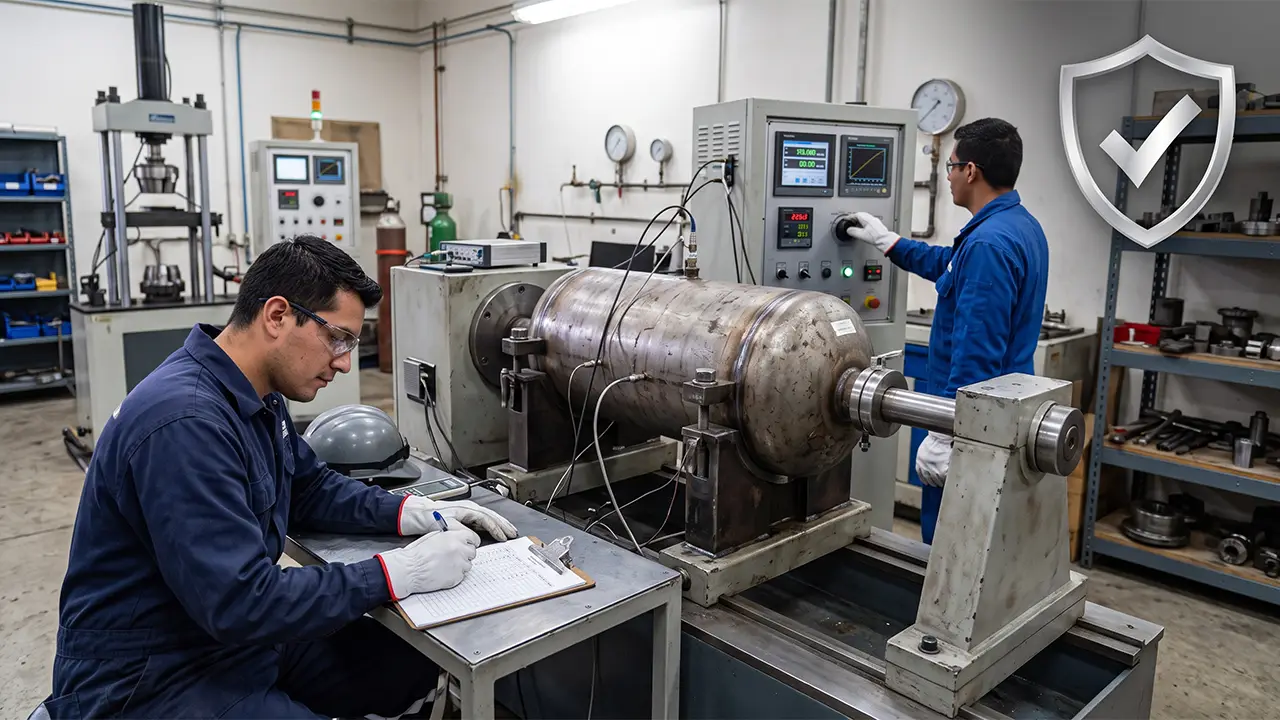
The Automotive Research Association of India (ARAI) has officially received ISO/IEC 17025:2017 accreditation from the National Accreditation Board for Testing and Calibration Laboratories (NABL). This recognition has been awarded to the organisation’s Cylinder Testing Facility, situated at the Mobility Research Centre in Takwe, Pune.
Currently fully operational, the laboratory focuses on testing high-pressure gaseous cylinders. These specialised storage systems are widely utilised across diverse sectors, including automotive, hydrogen, industrial, marine, defence, and space applications.
Understanding ISO/IEC 17025:2017 and NABL Standards
NABL operates as India’s national accreditation body for testing and calibration laboratories, functioning under the broader framework of the Quality Council of India.
The ISO/IEC 17025:2017 designation serves as the international standard for assessing the competence of testing and calibration laboratories. Achieving accreditation under this specific standard validates a facility’s technical reliability, method validity, and overall laboratory competence.
Testing Scope for Type I to Type IV Cylinders
The ARAI facility is equipped to comprehensively test Type I, Type II, Type III, and Type IV gaseous cylinders. These four cylinder categories are differentiated by their construction, material composition, and liner design.
Such cylinders are primarily integrated into compressed natural gas, hydrogen, and other gaseous storage systems. Furthermore, the Takwe facility supports the testing of cylinders designed for CNG, HCNG, oxygen, nitrogen, inert gases, and various other gas applications regulated under the Gas Cylinder Rules.
Comprehensive Testing Capabilities
The laboratory is designed to conduct an extensive suite of evaluations. Its capabilities cover material characterisation, hydrostatic testing, permeation testing, burst testing, bonfire testing, drop testing, and pressure cycling under climatic conditions. The facility also performs thorough mechanical and environmental durability evaluations.
Within its established parameters, the centre can test hydrogen cylinders at pressures reaching up to 700 bar. However, certain specialised hydrogen tests currently remain outside the existing scope of the NABL accreditation.
Key Facts for Competitive Exams
- ARAI: Established in 1966, it functions as a premier automotive research and testing organisation in India.
- NABL: The national accreditation body for testing and calibration laboratories in India.
- ISO/IEC 17025: The globally recognised standard for testing and calibration laboratory competence.
- Cylinder Classification: Hydrogen storage cylinders are officially classified by construction into Type I, Type II, Type III, and Type IV categories.
From an examination and industry perspective, this facility is directly linked to expanding India’s domestic testing capacity for high-pressure alternative fuel systems. It plays a critical role in supporting essential certification work for technology developers and manufacturers operating in India.